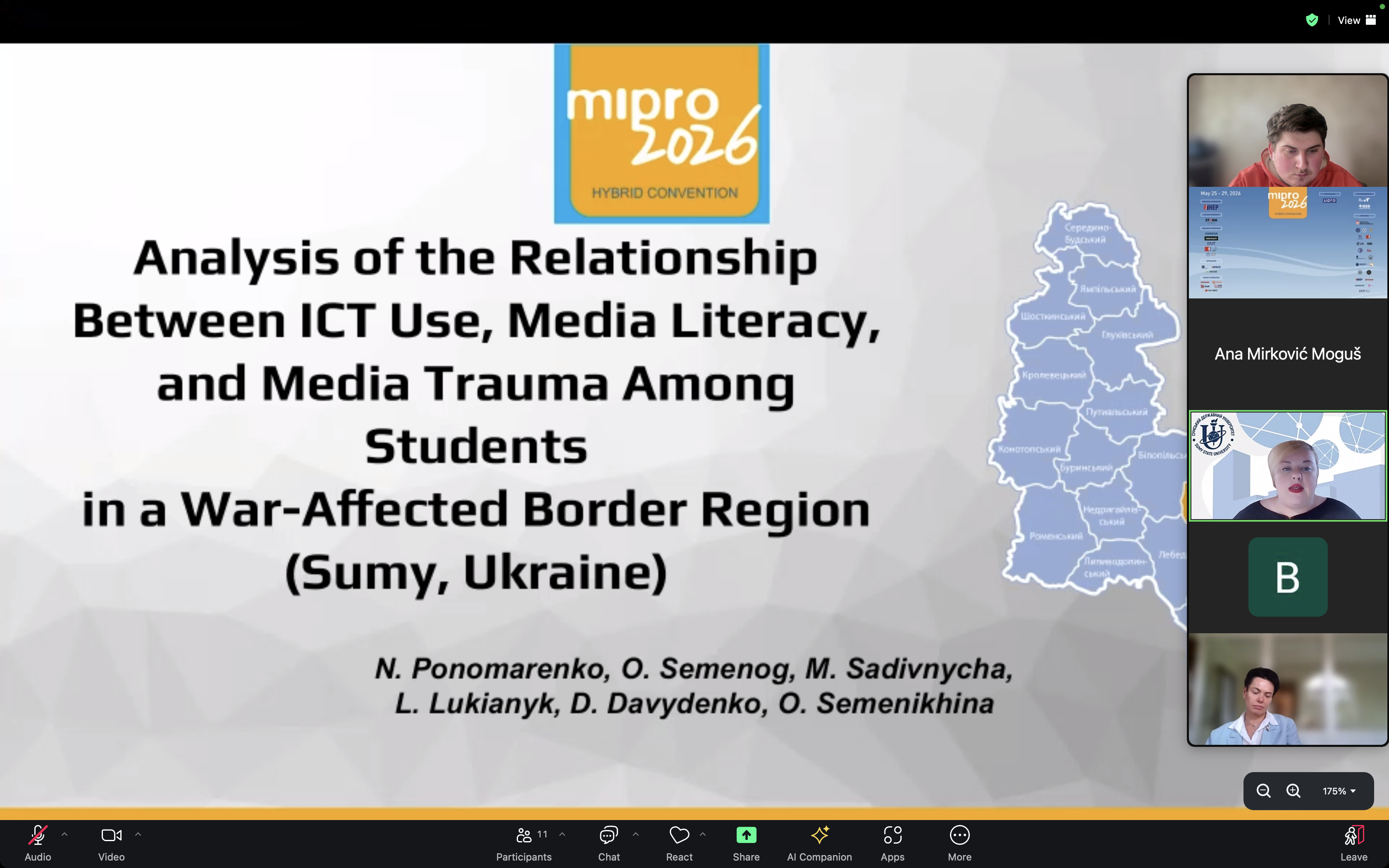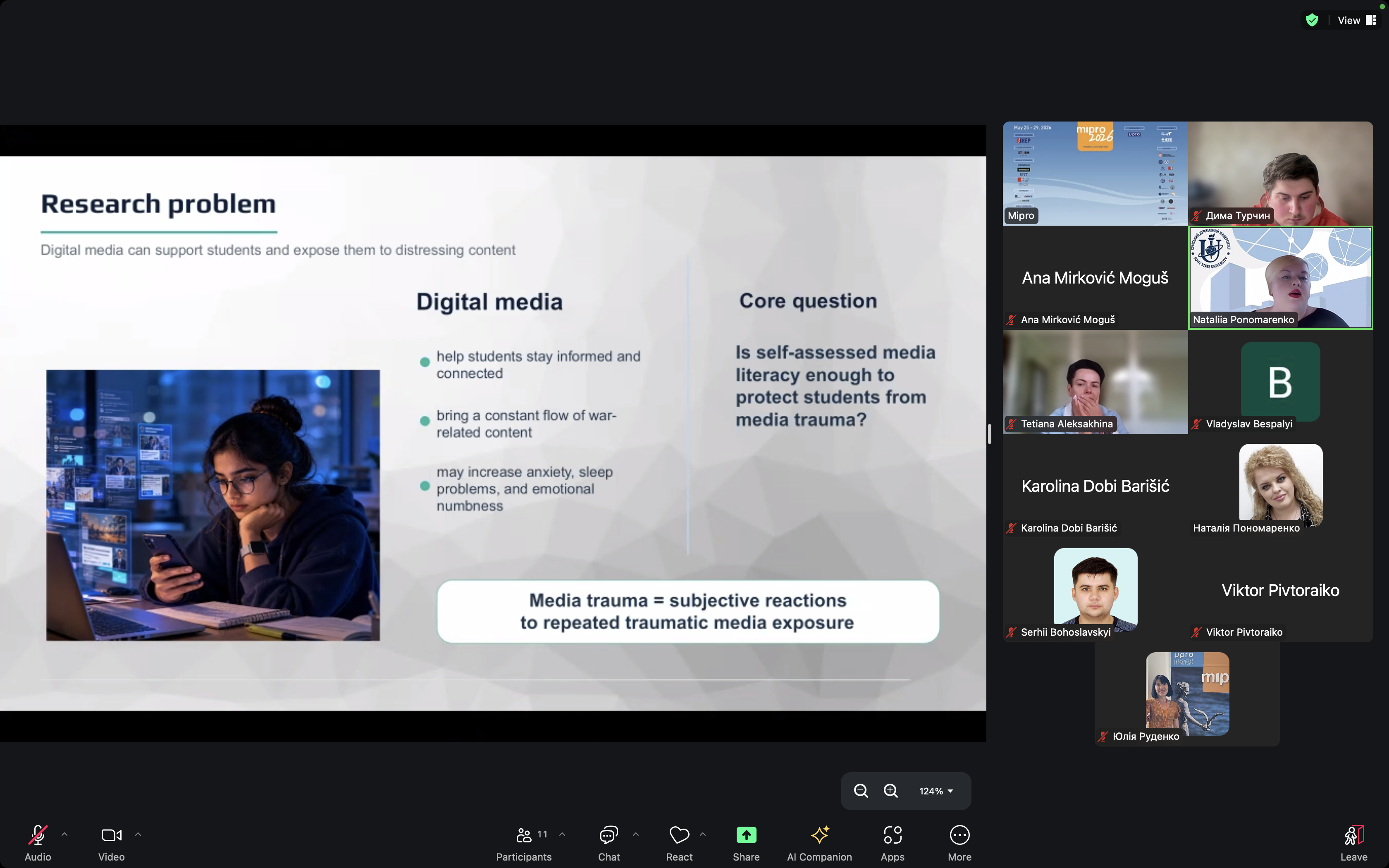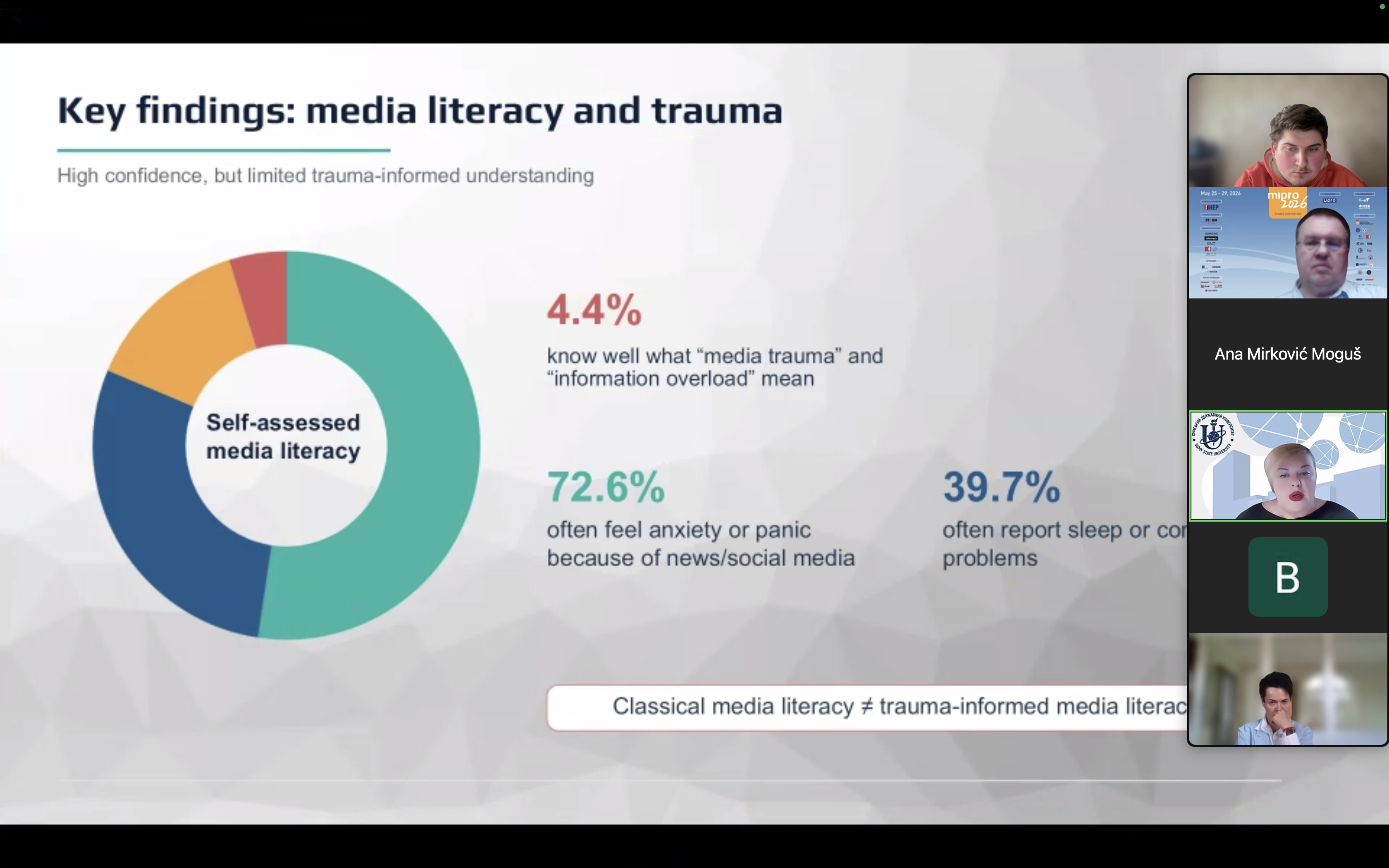
Студентка 3-го курсу спеціальності А4 Середня освіта (Інформатика) Дар’я ДАВИДЕНКО долучилася до команди дослідників з різних ЗВО України для проведення пілотного дослідження, результати якого були подані на міжнародній конференції MIPRO 2026 - 49th ICT and Electronics Convention у секції CE - Computers in Education. У центрі дослідження були здобувачі освіти з міста Суми та Сумської області, для яких цифрові технології в умовах війни виконують подвійну функцію. З одного боку, вони підтримують безперервність освітнього процесу, комунікацію та доступ до навчальних матеріалів. З іншого боку, постійне перебування в цифровому інформаційному полі посилює контакт із травматичним воєнним контентом. Було представлено результати онлайн-опитування 252 респондентів. Зокрема, було показано домінування смартфонів як основного пристрою для навчання і споживання новин, високий рівень використання Telegram як джерела інформації, часте звернення до новин протягом дня та поширеність симптомів тривоги, порушень сну й концентрації, пов’язаних із воєнним медіаконтентом. Окремо підкреслено, що висока самооцінка медіаграмотності не завжди захищає від емоційного виснаження. Тому медіаосвіта в умовах війни має включати не лише фактчекінг, а й інформаційну гігієну, цифрові паузи та елементи травма-інформованої підтримки.
_______________________________________
Daria DAVYDENKO, a third-year student majoring in A4 Secondary Education (Computer Science), joined a team of researchers from various higher education institutions across Ukraine to conduct a pilot study, the results of which were presented at the international conference MIPRO 2026 – 49th ICT and Electronics Convention in the CE – Computers in Education section. The study focused on students from the city of Sumy and the Sumy region, for whom digital technologies serve a dual purpose in wartime. On the one hand, they ensure the continuity of the educational process, communication, and access to learning materials. On the other hand, constant exposure to the digital information space increases contact with traumatic war-related content. The results of an online survey of 252 respondents were presented. In particular, the study highlighted the dominance of smartphones as the primary device for learning and consuming news, high usage of Telegram as a source of information, frequent engagement with news throughout the day, and the prevalence of anxiety symptoms, sleep disturbances, and concentration difficulties linked to war-related media content. It was specifically emphasized that a high self-assessment of media literacy does not always protect against emotional exhaustion. Therefore, media education in wartime should include not only fact-checking but also information hygiene, digital breaks, and elements of trauma-informed support.